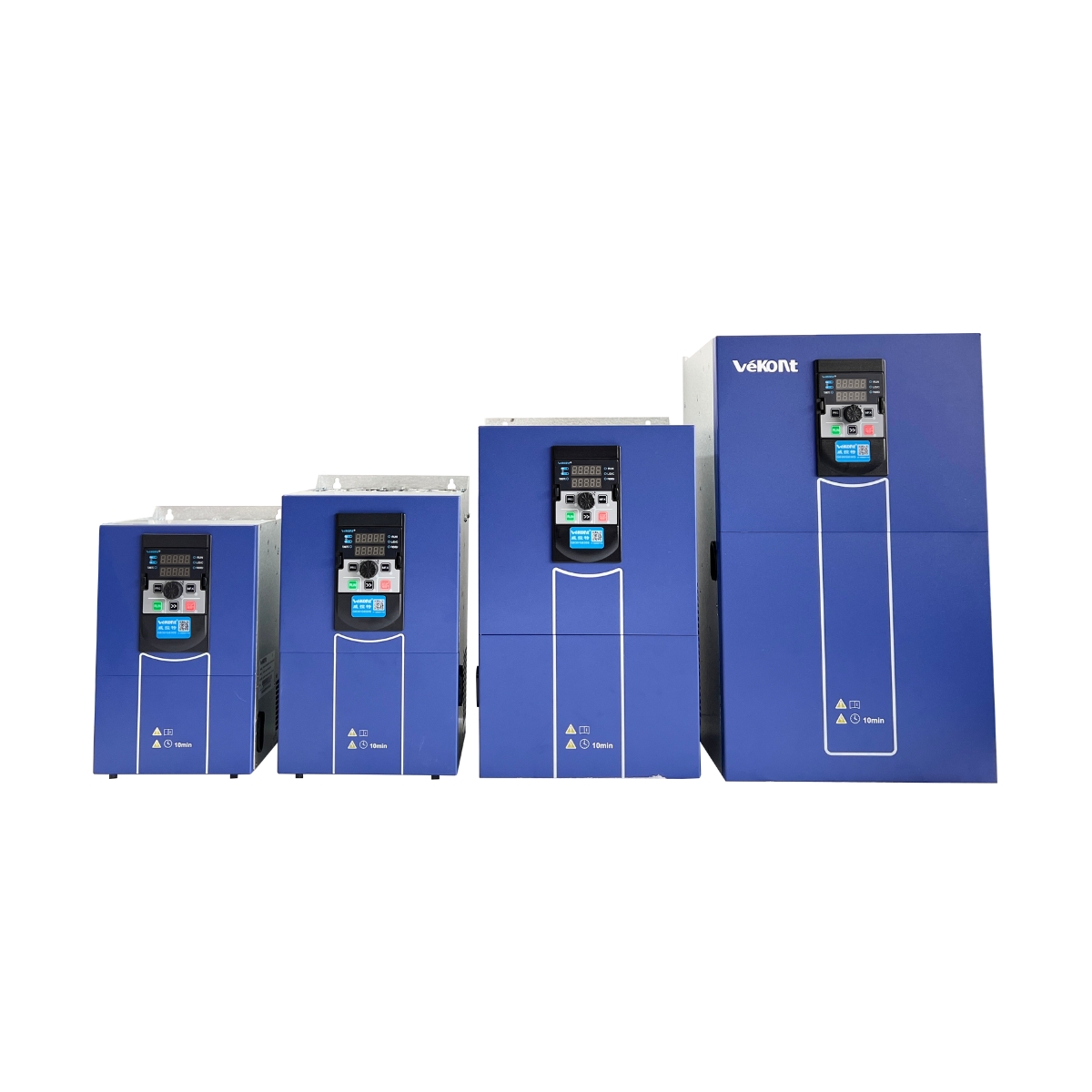
What's Variable-Frequency Drive(VFD)?
Date:06-05
Hits:338
Belong to:FAQ
In the realm of electrical engineering and industrial applications, Variable Frequency Drives (VFDs) have emerged as essential tools for improving energy efficiency, enhancing control, and extending the lifespan of various types of electric motors. These devices provide the capability to adjust the frequency and voltage supplied to a motor, allowing for precise control of motor speed and power consumption. Let's delve into the workings, benefits, and applications of Variable Frequency Drives.
A Variable Frequency Drive (VFD), in simple terms, is a device that controls the speed of an electric motor by adjusting the frequency and voltage of the electrical power supplied to it. Imagine it like the accelerator pedal in a car – just as pressing the pedal controls how fast the car goes, a VFD controls how fast a motor runs. It's used to save energy, increase efficiency, and give precise control over motor speed in various machines and systems.
Here's a more technical breakdown of how a VFD works:
- Input AC Power: The VFD receives standard AC power from the electrical grid or a power source.
- Rectification: The input AC power is first converted into DC (direct current) power using a rectifier circuit. This involves passing the AC power through diodes that only allow current to flow in one direction, resulting in a smoother DC signal.
- DC Bus: The converted DC power is stored in a capacitor bank known as the DC bus. This capacitor bank acts as a buffer to provide a steady source of energy to the subsequent stages.
- Inverter Stage: The DC power from the bus is then sent to the inverter stage. The inverter comprises a series of power transistors (usually insulated gate bipolar transistors or IGBTs) that switch the DC voltage on and off at a high frequency. This switching creates a synthetic AC waveform with adjustable frequency and voltage.
- Pulse Width Modulation (PWM): The switching of the transistors is controlled through a technique called Pulse Width Modulation (PWM). By changing the duration (width) of the on and off states of the transistors, the average voltage and frequency of the synthetic AC waveform can be adjusted.
- Output to Motor: The synthesized AC waveform is then sent to the motor's terminals. The motor interprets this waveform as AC power with varying frequency and voltage, causing it to run at different speeds.
- Control Mechanism: The user or an automated control system adjusts the VFD's settings to determine the desired motor speed. The VFD processes these settings and generates the appropriate PWM waveform to achieve the required speed.