Food & Beverage
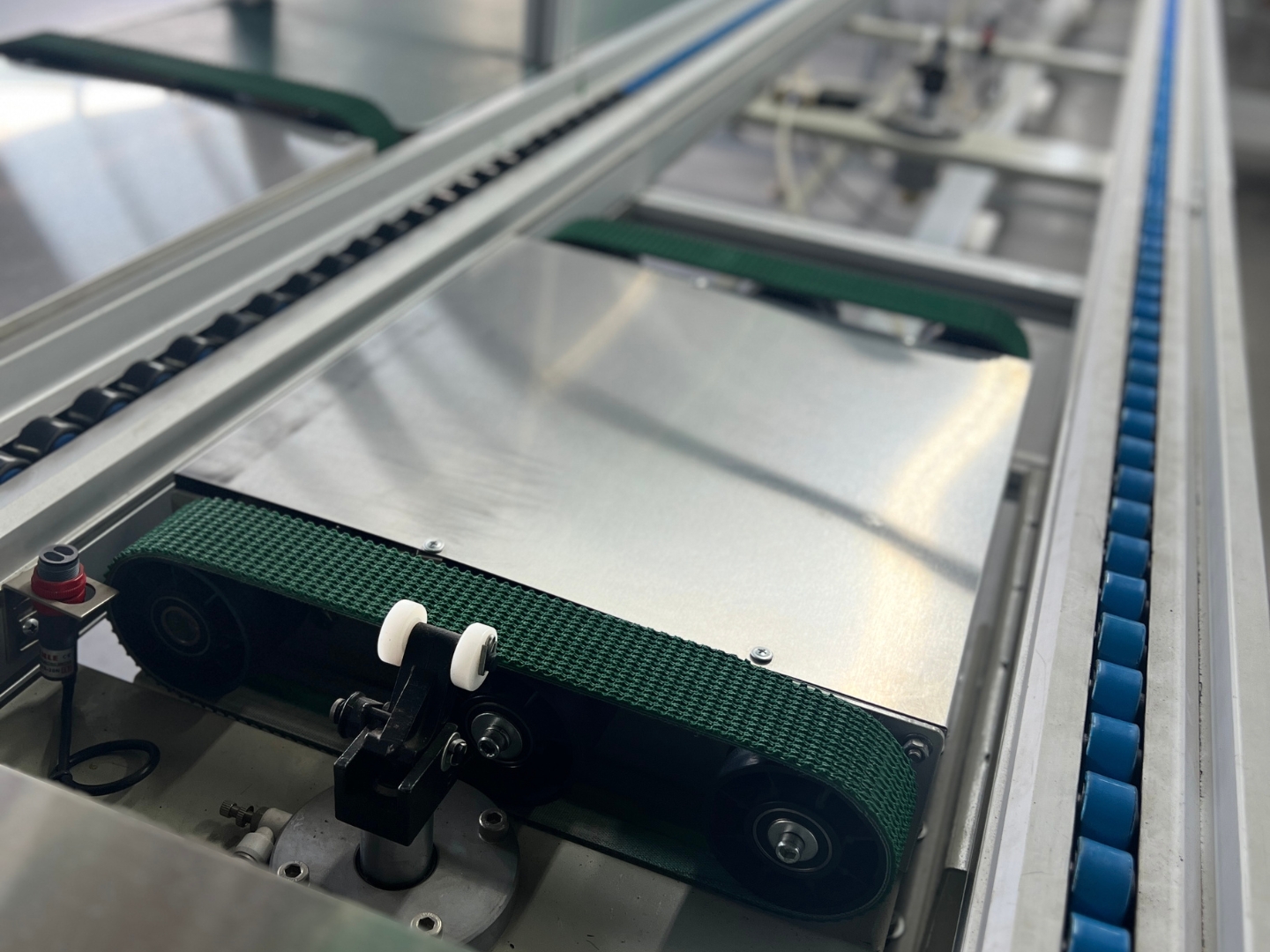
G630 offers acvanced functionality for constant torque applications such as conveyors that are found in Food & Beverage facilites.
Variable Frequency Drives (VFDs) have a wide range of applications in food and beverage facilities, especially in constant torque loads (e.g., conveyors) where they can significantly improve the efficiency and stability of equipment operation and reduce energy consumption and maintenance costs. The following are the detailed principles and explanations of VFDs in these applications:
1. Basic Principle
Inverters control the speed and torque of an electric motor by adjusting its operating frequency. The rotational speed of the motor is directly proportional to the frequency of the input current. By changing the frequency of the input current, the frequency converter can realize the precise control of the equipment running status.
2. Constant torque load
Constant torque loads are applications where the load torque remains constant throughout the speed range. This is very common on equipment such as conveyors and mixers in food and beverage facilities.
Control Principle:
FREQUENCY CONTROL: The inverter controls the speed of the motor by adjusting the output frequency, thus regulating the running speed of the conveyor.
Torque control: The frequency converter is able to maintain constant torque output from the motor over the entire speed range, ensuring that the conveyor can run smoothly under different load conditions.
3. Advantages in food and beverage facilities
1. Precise speed control
Flexible adjustment: With the frequency converter, the speed of the conveyor can be flexibly adjusted according to the needs of the production process, improving the flexibility and efficiency of the production line.
Stable operation: the frequency converter provides smooth starting and stopping process, avoiding the shock and vibration caused by traditional mechanical starting, ensuring the stability of the conveying process.
2. Energy saving effect
Energy efficiency optimization: the frequency converter dynamically adjusts the running parameters of the motor according to the actual load, which significantly reduces energy consumption under partial load.
Reduce loss: By optimizing the running efficiency of the motor, it reduces energy waste and equipment heating and improves the overall energy efficiency.
3. Extend equipment life
Reduced mechanical impact: Smooth acceleration and deceleration processes reduce wear and impact on mechanical components, extending equipment life.
Reduced maintenance costs: By reducing mechanical wear and tear and failure rates, equipment maintenance costs and downtime are reduced.
4. Improve production efficiency
Automation control: frequency converter can be integrated with PLC, SCADA and other automation systems to realize intelligent control and monitoring and improve the automation level and operation efficiency of the production line.
Flexible production: the precise control ability of frequency converter makes the production line can be quickly adapted to the production demand of different products, and improve the production efficiency and product quality.
4. Specific application cases
1. Conveyor
Conveyors are used in food and beverage facilities to transfer raw materials, semi-finished products and finished products. The following functions can be realized through inverter control:
Speed adjustment: according to the production rhythm and process requirements, the conveyor speed is adjusted in real time to ensure the coordinated operation of each process.
Torque maintenance: Maintaining constant torque throughout the speed range, ensuring stable operation of the conveyor under different load conditions and avoiding downtime or failure due to load fluctuation.
2. Mixer
The mixer is used to mix all kinds of raw materials and can realize the following functions through the inverter control:
Precise mixing: Adjust the mixing speed and time according to different recipe requirements to ensure the raw materials are fully mixed to achieve the best product quality.
Constant torque: maintain constant torque during mixing to ensure uniform mixing and avoid uneven mixing or equipment overload due to changes in the viscosity of raw materials.
5. Easy operation and multi-function
The inverter has a friendly man-machine interface, through the simple programming and operation interface, users can easily set and adjust the operating parameters of the equipment. The inverter supports various operation modes, such as constant speed, constant pressure, constant current, etc., to meet different process requirements.
Conclusion
Constant torque applications in food and beverage facilities, such as conveyors and mixers, can be precisely controlled and efficiently operated through the use of inverters. The use of inverter technology not only improves the overall efficiency of the system, but also significantly reduces energy consumption, extends the life of the equipment, and improves productivity and product quality. The importance of frequency converters in these applications cannot be ignored, providing efficient, energy-saving and reliable solutions for modern food and beverage production.